Select Page

Spoiler alert: your vicar may well not want you to know about this…

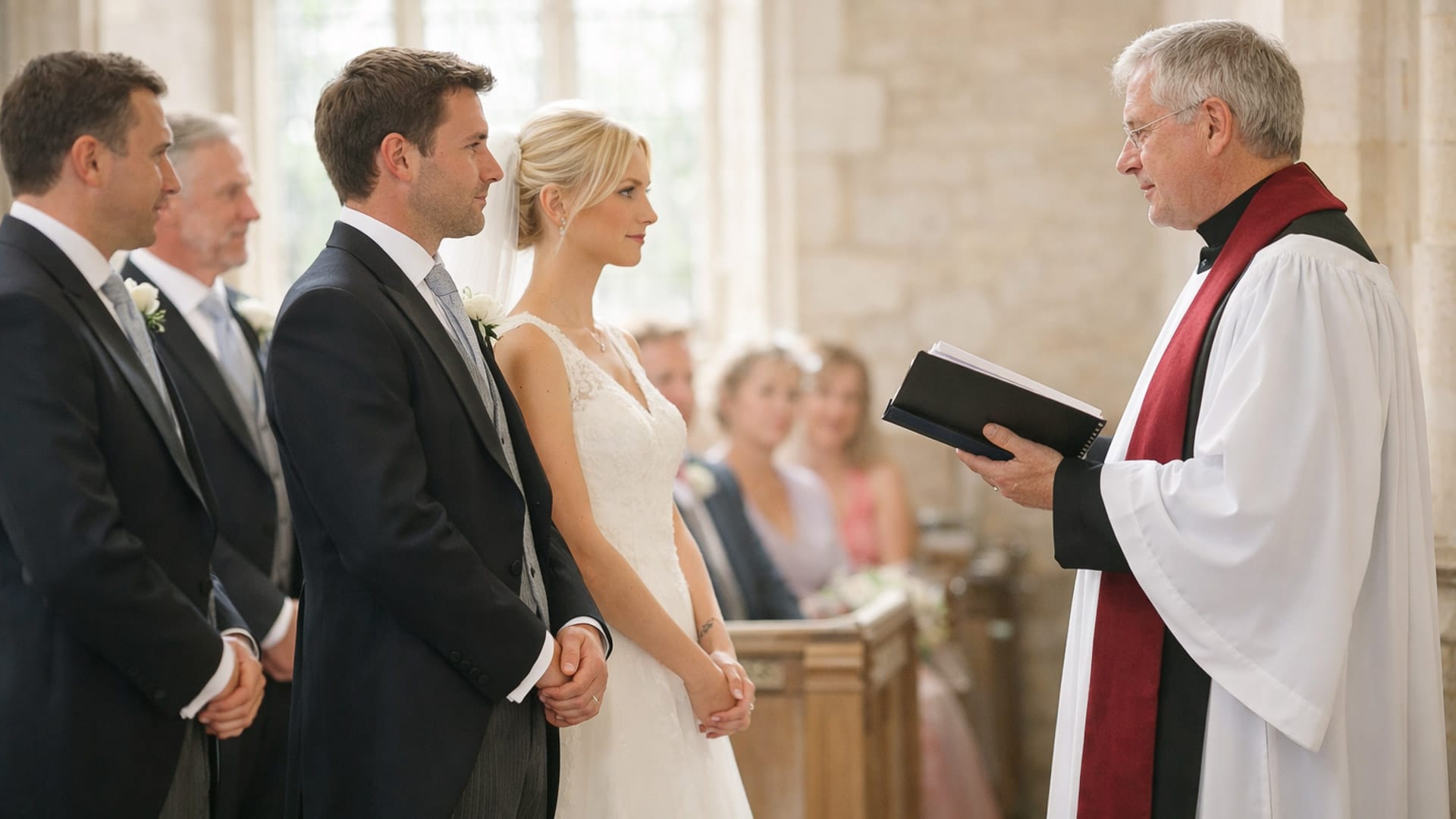
If you’ve decided to get married in church, even though your Christian faith is likely to be your main motivation, you’ve probably been drawn to the church at least in part for aesthetic reasons. 

Most churches in Britain were built well before the Second World War – some even date from Saxon times – and are more imposing than most civil venues.

NHS prose?

Part of the appeal of a church wedding ought to be the liturgy – the order of service comprising the vows you make, the prayers the priest recites and so on. 

Nowadays, the order of service used by default for marriage ceremonies in church is in everyday English.

In an age when few people regularly attend church, that’s understandable.

But to my mind, this use of Plain English deprives the wedding service of a certain poetry that elevates the vows you make. For example:

I, {Name}, take you, {Name}, to be my husband, to have and to hold from this day forward; for better, for worse…

Worse still, the preface to the order of service recited by the priest includes the immortal line:

The gift of marriage brings husband and wife together in the delight and tenderness of sexual union.

While it’s only a passing reference, do you want your family and friends imagining the two of you in bed together just before you make solemn vows to each other?

The poetic alternative

Luckily, at least in the Church of England, there is an alternative order of service. And in fact a version of it, shorn of relgious references, is also offered by civil registry offices!

Members of the clergy might well not draw attention to it and, if you show interest, they might well discourage you, ‘it’s outdated’ or ‘your guests won’t understand it’ or simply ‘we don’t offer it in this church’. This alternative order of service is the form of words set out in the Book of Common Prayer first published in 1662.

Is language is far more poetic:

{Name}, wilt thou have this man to thy wedded husband, to live together after God’s ordinance in the holy estate of Matrimony? Wilt thou obey him, and serve him, love, honour, and keep him, in sickness and in health; and, forsaking all other, keep thee only unto him, so long as ye both shall live?

On the other hand, its preface includes a warning that’s perhaps too ‘fire and brimstone’ for modern tastes:

 Holy matrimony…is not by any to be enterprised, nor taken in hand, unadvisedly, lightly, or wantonly, to satisfy men’s carnal lusts and appetites, like brute beasts that have no understanding.

The third way

But there is a third way: an order of service that retains the poetry of 1662 while eschewing language that’s now beyond the pale for most modern sensibilities. This is Alternative Services: Series One, sometimes known as the 1928 Service. It’s the liturgy used at my wedding and what I commend to you.

Wilt thou love him, comfort him, honour and keep him, in sickness and in health; and, forsaking all other, keep thee only unto him, so long as ye both shall live? 

What could be more timeless than that?

If this resonates with you, bookmark this blog in your browser and politely insist on the order of service you prefer when you discuss your wedding arrangements with your Vicar.

You might also enjoy…

Hello world!

Welcome to WordPress. This is your first post. Edit or delete it, then start writing!

Spinnaker Tower wedding reception

The Spinnaker Tower, Portsmouth, was the stunning venue for Irina and Alex’s wedding reception. This followed their ceremony at Portsmouth Guildhall earlier in the afternoon. Before making the ascent up the Spinnaker Tower to join their wedding guests, Irina and Alex…

Portsmouth Guildhall wedding with fine-art photographs

Irina and Alex got married at Portsmouth Guildhall, a venue that lends itself exceptionally well to fine-art wedding photography. The civic building lends majesty and elegance to your celebrations. Although only a century old, it feels ancient, grand and steeped in…